

Could disease clearance become the optimal treatment target in moderate-to-severe ulcerative colitis (UC)?
VERDICT is a study aiming to determine the optimal treatment target for patients with moderate-to-severe UC being treated with Entyvio (vedolizumab).1 Patients with UC were treated with Entyvio according to an algorithm that was dependent on the patient’s baseline UC therapy and randomised into three different groups, each aiming for a different treatment target:1
- Group 1 – Corticosteroid-free symptomatic remission
- Group 2 – Corticosteroid-free symptomatic and endoscopic remission
- Group 3 – Corticosteroid-free symptomatic, endoscopic, and histological remission (also known as disease clearance)
The primary endpoint of the study was to determine whether disease clearance (group 3) is superior to solely targeting corticosteroid-free symptomatic remission (group 1), measured by time from treatment target achievement to a disease-related complication.1
Download the infographic
Download the full infographic or keep reading to find out more about the study design and key interim data.
During an interim analysis of observed data (as of 29th February 2024), 612 patients were enrolled as follows:2
- Group 1 – Corticosteroid-free symptomatic remission (n=154)
- Group 2 – Corticosteroid-free symptomatic and endoscopic remission (n=198)
- Group 3 – Corticosteroid-free symptomatic, endoscopic, and histological remission (n=260)
Entyvio achieved disease clearance treatment targets set out in VERDICT2
Entyvio achieved disease clearance treatment targets set out in VERDICT2
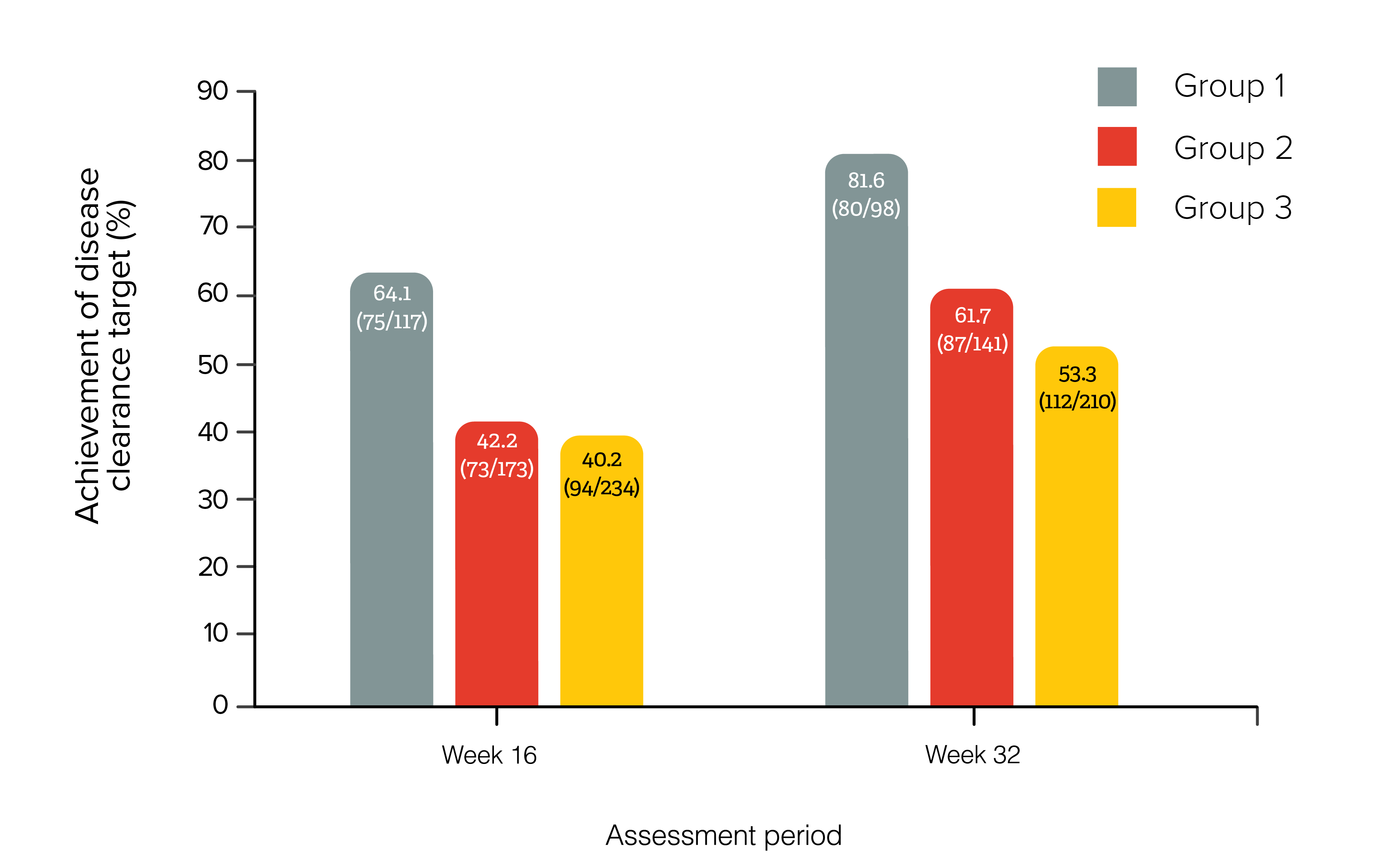
Adapated from Jairath V, et al. UEGW 20242
A higher proportion of bio-naïve patients achieved disease clearance treatment targets with Entyvio compared with bio-exposed patients2
A higher proportion of bio-naïve patients achieved disease clearance treatment targets with Entyvio compared with bio-exposed patients2
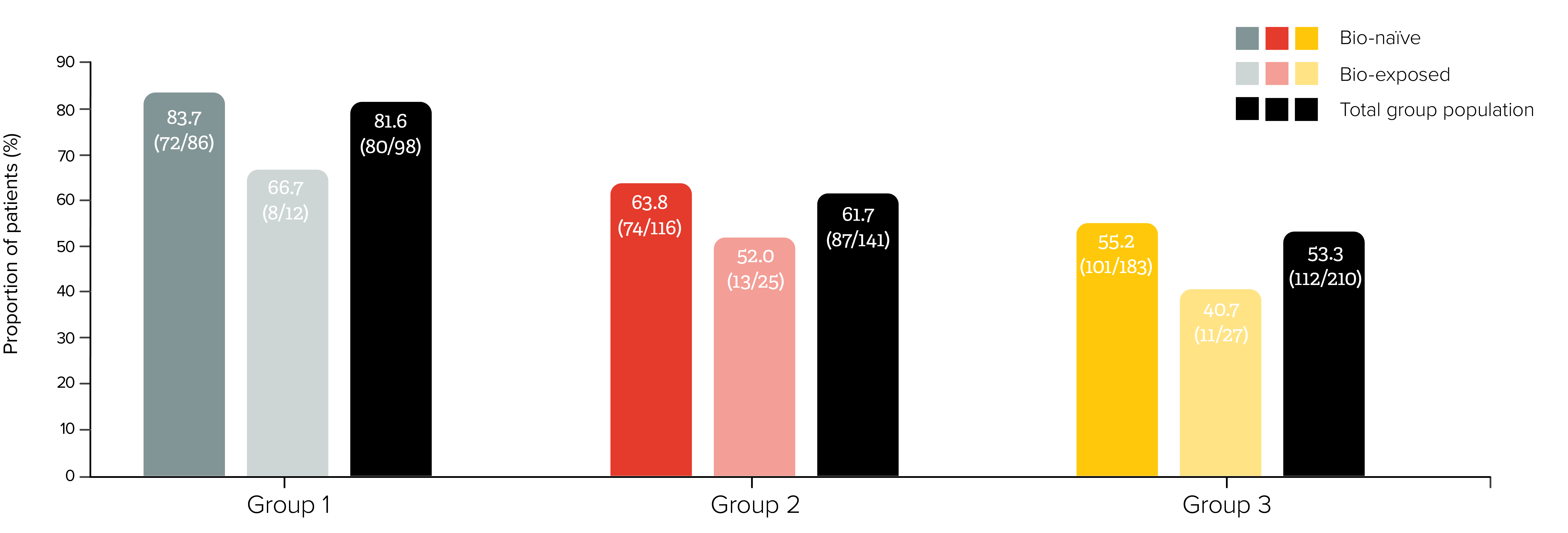
Adapated from Jairath V, et al. UEGW 202411


References:
- Jairath V, et al. BMJ Open Gastroenterol 2024;11:e001218.
- Jairath V, et al. Poster PP0556 presented at UEGW 2024.
- Entyvio Summary of Product Characteristics. Available at www.medicines.ie.