
Predicting response to Entyvio® (vedolizumab) in patients with Crohn’s disease (CD)
Understanding the benefits of using the Vedolizumab Clinical Decision Support Tool (VDZ-CDST)
The VDZ-CDST is a globally validated tool developed for use in CD2,3
Clinical trial data was used to identify common predictors of patients achieving three targets:2
Clinical trial data was used to identify common predictors of patients achieving three targets:2
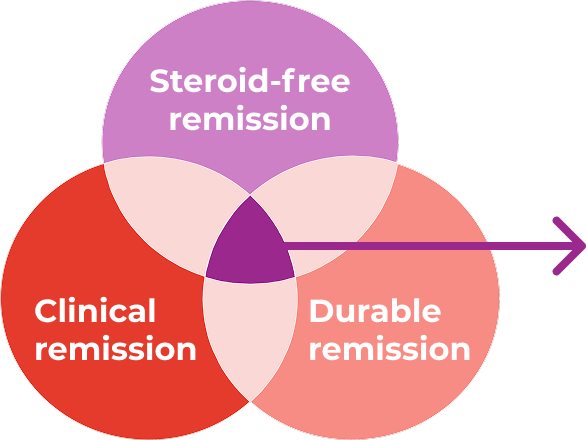
Figure adapted from Dulai PS, et al. 2018.2
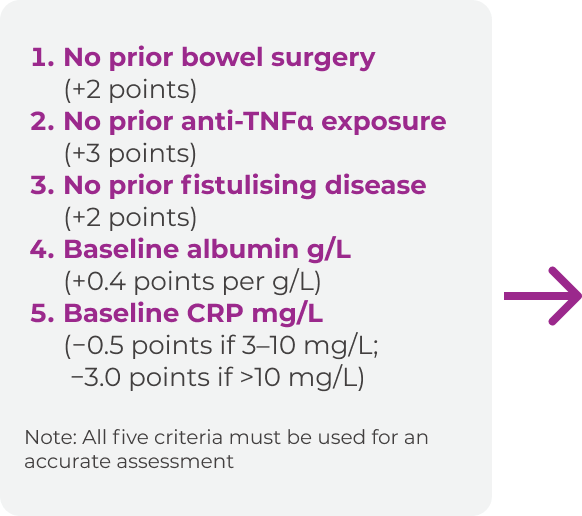
Clinical predictors:2
Clinical predictors:2
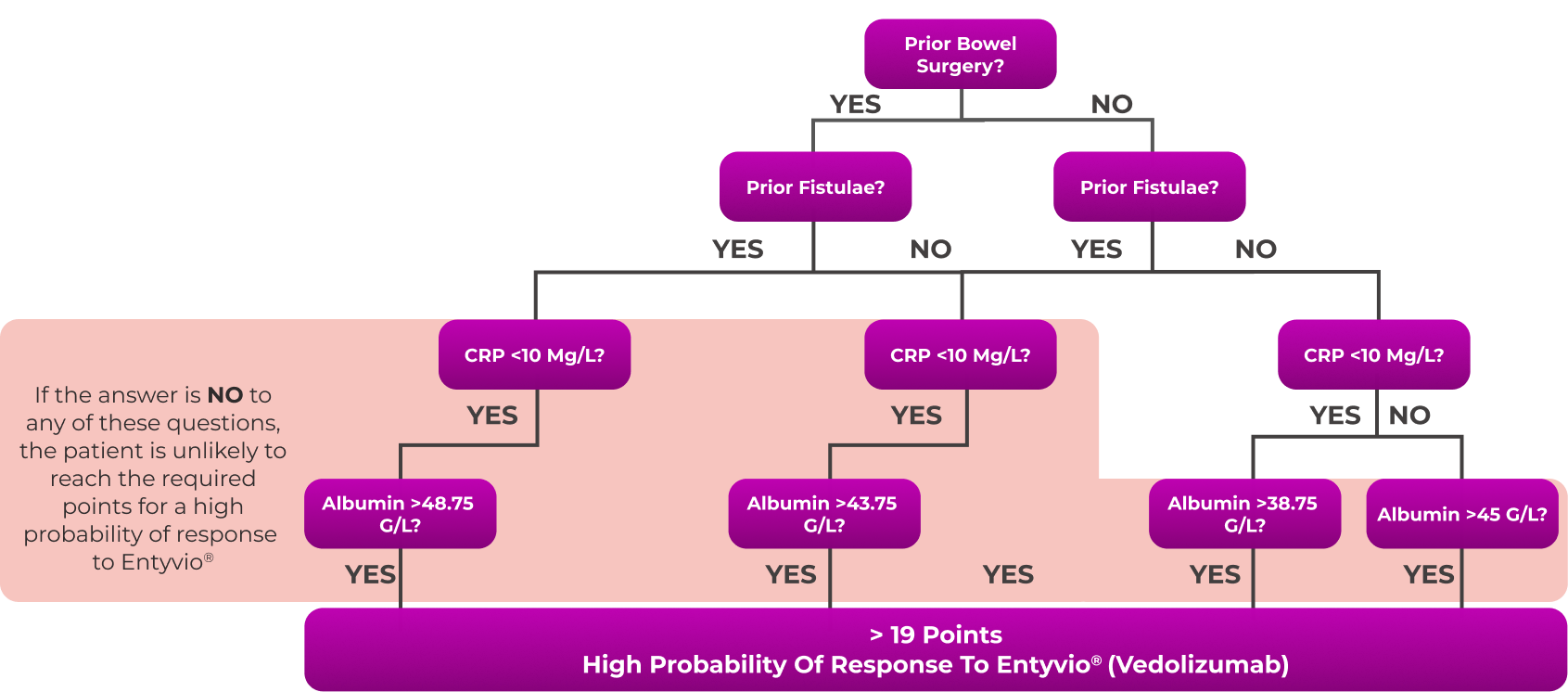
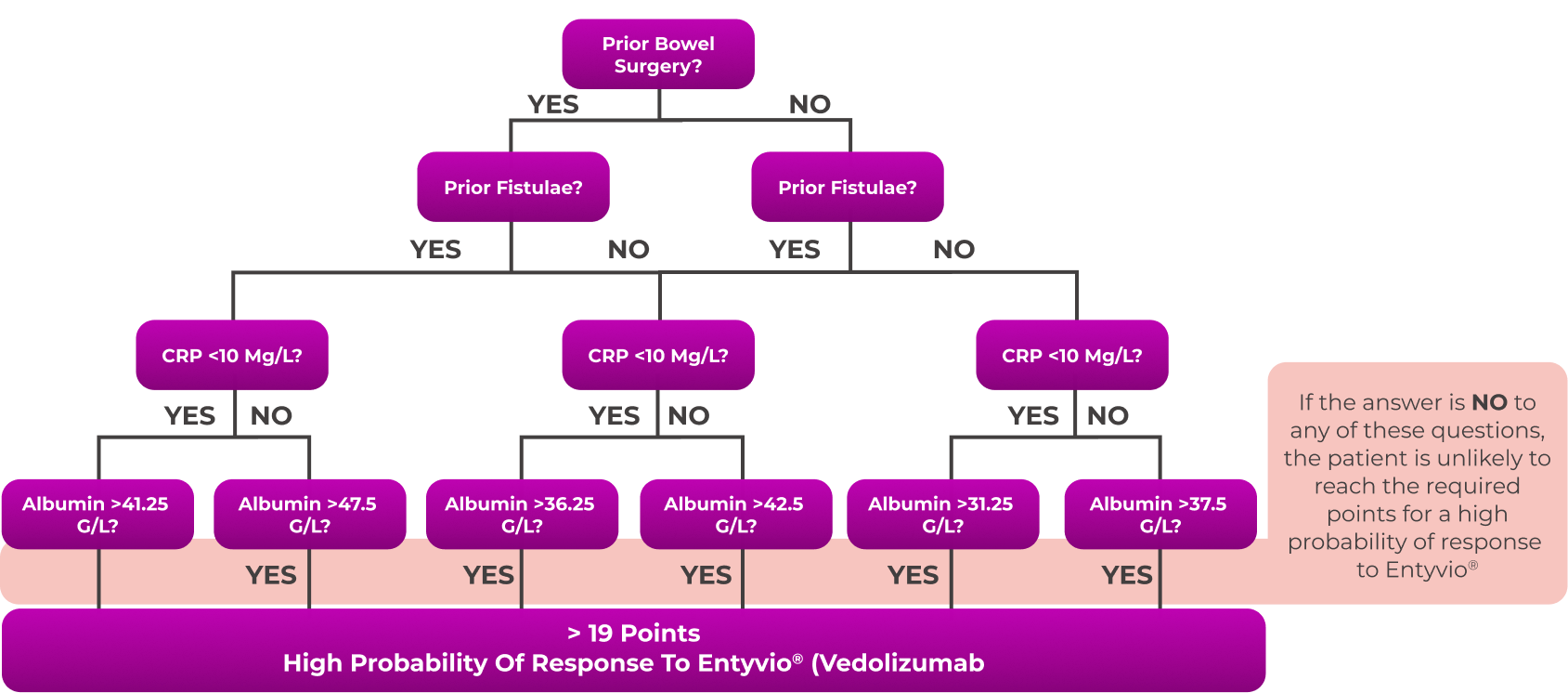
Patient classification:3
Patient classification:3
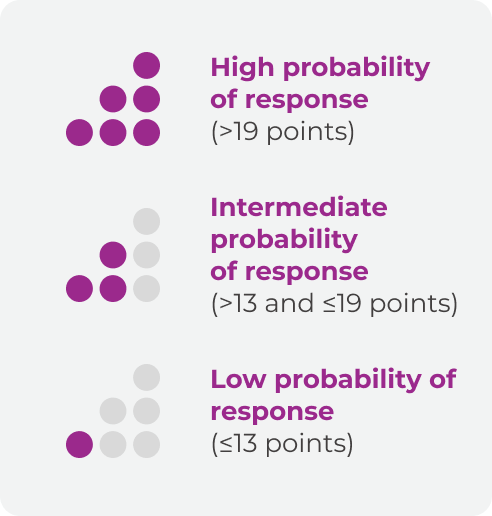
The VDZ-CDST calculates the probability that a patient with
CD will respond to treatment with Entyvio®
The VDZ-CDST calculates the probability that a patient with CD will respond to treatment with Entyvio®
Sensitiviy
Sensitiviy
The VDZ-CDST has a 92% sensitivity; only 8% of patients in clinical remission with Entyvio® will have a score <13 points
Specificity
Specificity
The VDZ-CDST has 80% specifcity; 20% of patients not in clinical remission with Entyvio® will have a score >19 points2
Particularity
Particularity
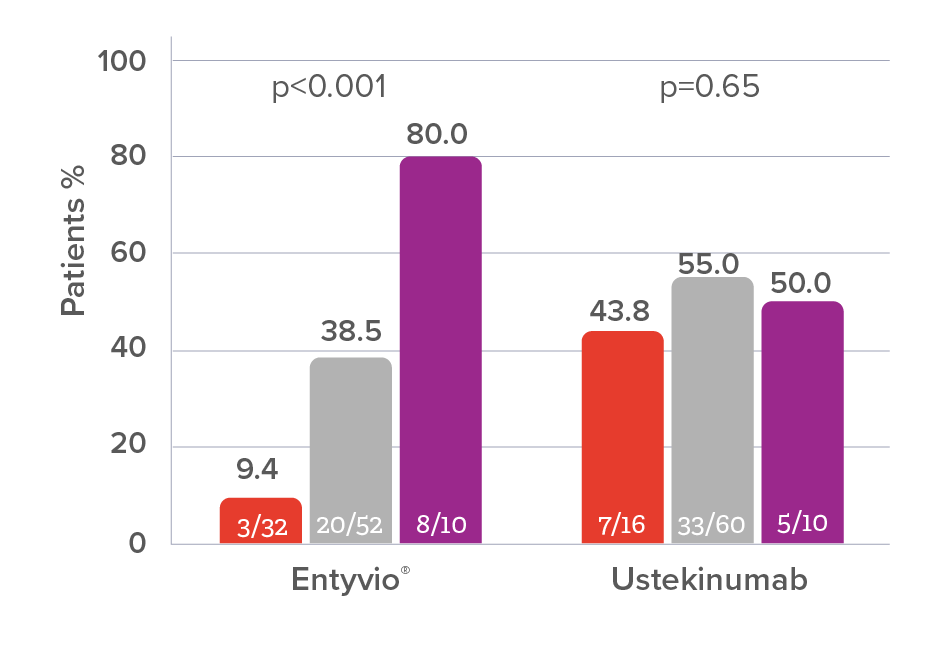
The VDZ-CDST predicts probability of response to Entyvio®, but not ustekinumab:4
Clinical remission
Clinical remission
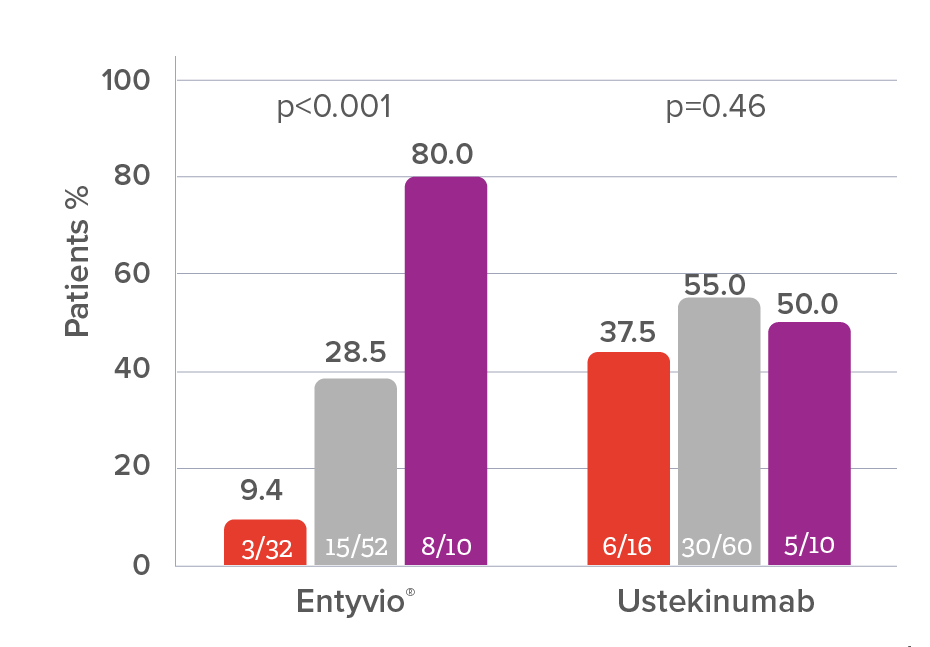
Steroid free remission
Steroid free remission
Explore how the VDZ-CDST can be used in these patient case studies by downloading the full interactive presentation:



Patients who have prior exposure to anti-TNFα therapy:
Patients who have prior exposure to anti-TNFα therapy:
Patients who have no prior exposure to anti-TNFα therapy:
Patients who have no prior exposure to anti-TNFα therapy:
Abbreviations:
CD, Crohn’s disease; CRP, C-reactive protein; TNFa, tumour necrosis factor alpha; UC, ulcerative colitis; VDZ-CDST, Vedolizumab Clinical Decision Support Tool.
References:
- Entyvio® Summary of Product Characteristics. Available at www.medicines.ie.
- Dulai PS, et al. Gastroenterology 2018;155:687–695.
- Dulai PS, et al. Aliment Pharmacol Ther 2020;51:553–564.
- Alric H, et al. Inflamm Bowel Dis 2022;28:218–252.
- Dulai PS, et al. Crohns Colitis 360 2022;4:otac04.